
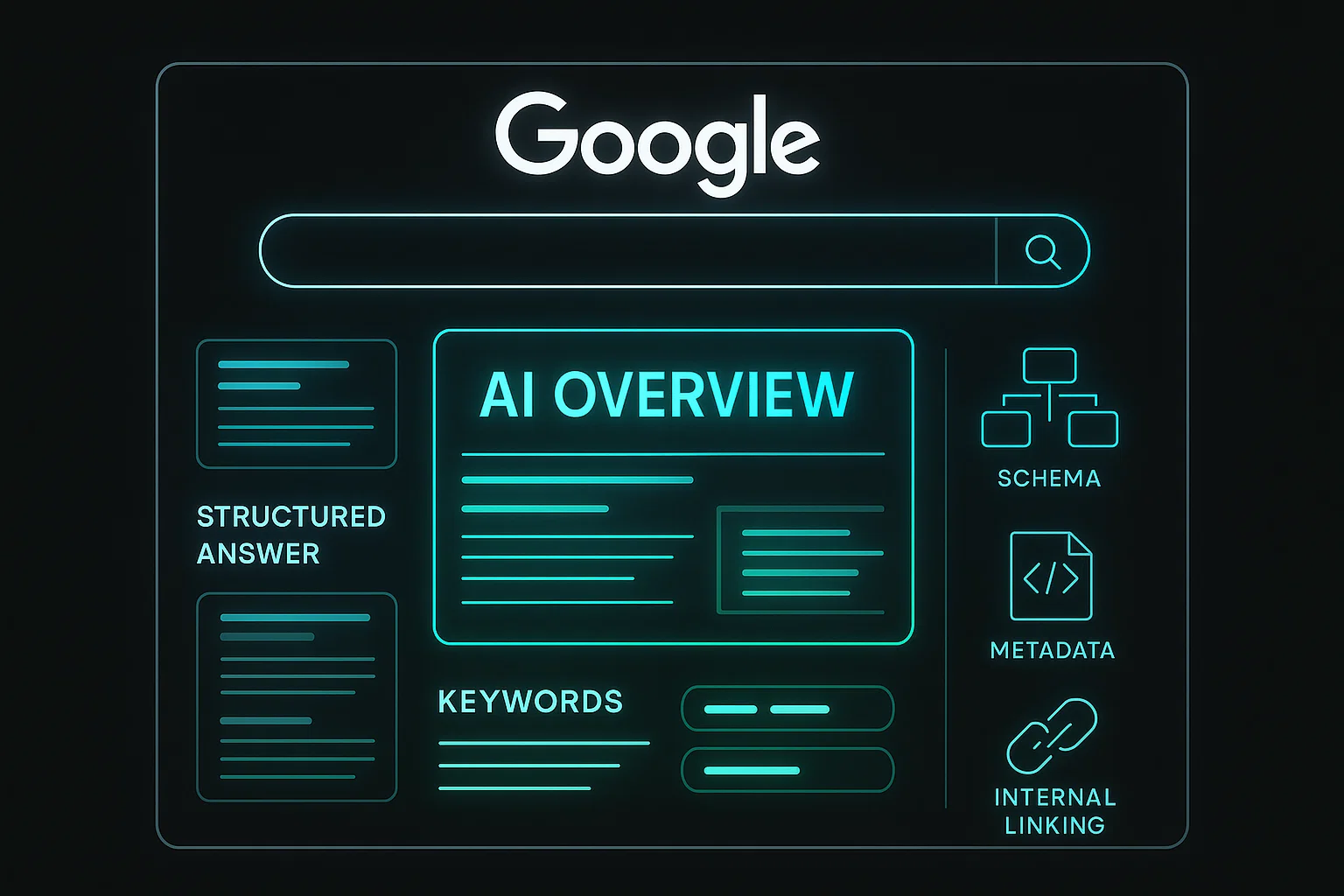
We’ve all watched as search results have changed dramatically, haven’t we? It feels like just yesterday we were hyper-focused on snagging the number one organic ranking spot. But today, the digital landscape has fundamentally shifted with the introduction of google ai Overviews. These are concise, AI-generated summaries that are completely redefining what successful search engine optimization looks like.
If you’re still relying only on decade-old SEO tactics, your visibility is going to suffer. We need to focus on Answer Engine Optimization (AEO). This isn’t just a simple content tweak; it’s a necessary strategic pivot for future-proofing your business. This aeo guide will walk us through the essential, practical steps to ensure your high-quality content doesn’t just rank it gets actively chosen and synthesized by the google algorithm itself.
Key Takeaways
- Google AI Overviews generate concise, authoritative summaries directly in search results, reshaping SEO by prioritizing clear, user-focused content that matches intent and reduces click-through rates while boosting visibility.
- Optimizing for AI Overviews involves using structured headings (H2, H3), concise answers, varied content types like FAQs and lists, and strategic keyword placement aligned with natural language and user intent.
- Emphasizing E-E-A-T (Experience, Expertise, Authoritativeness, Trustworthiness) and regularly updating content ensures AI-generated summaries present trustworthy, fresh information that enhances search efficiency and organic traffic.
- Combining AEO (Answer Engine Optimization) with traditional SEO maximizes reach by targeting featured snippets, voice search, and zero-click experiences alongside organic rankings, adapting to evolving AI-driven search behaviors.
- On-page SEO fundamentals such as clear meta titles, descriptions, structured URLs, and schema markup improve AI comprehension and snippet eligibility, making content AI-friendly and more visible in Google AI Overviews.
- Creating clear, answer-focused content with question-based headings and simple language helps Google’s AI quickly extract relevant information, increasing chances of being featured and improving user satisfaction in search results.
Understanding Google AI Overviews and Their Impact on SEO

Google ai overviews are, without a doubt, the most significant shift in search behavior we’ve encountered recently. They are authoritative summaries generated directly by the google algorithm.
Imagine if Google could instantly give users the precise, complex answer they need right there on the search results page, eliminating the need for a click. That’s the power we’re addressing. While this means organic click-through rates (CTR) might decrease for some traditional listings, it simultaneously boosts the credibility and visibility of the sources the AI chooses to cite. So, the real question is: How do we ensure our content is one of those trusted sources? We must optimize for structure, relevance, and authoritative answers.
What Are Google AI Overviews?
Simply put, google ai overviews are quick, AI content summaries displayed prominently at the top of search results. They are designed specifically for informational searches, think complex “how-to” guides or comparison queries. They pull and synthesize information from multiple authoritative sources, including Google’s Knowledge Graph, to give users key points without forcing them to open numerous browser tabs.
How Google’s Algorithm Uses AI to Generate Overviews
It’s an advanced, sophisticated process. The google algorithm employs sophisticated AI models to analyze content for more than just keywords; it evaluates the content’s context, the user’s intent, and the overall relevance.
Crucially, this AI process prioritizes content that demonstrates strong E-E-A-T signals: Experience, Expertise, Authoritativeness, and Trustworthiness. We can’t get away with thin or generic content anymore. I’ve seen content that consistently includes fresh statistics, verified case studies, and clear authorship earn far more AI overview spots because these details signal that vital trustworthiness to the AI. The whole point is to deliver information that is both accurate and genuinely user-focused, thereby enhancing search efficiency.
AEO vs Traditional SEO: Key Differences and Why It Matters
For years, the goal of search engine optimization was winning that coveted #1 organic spot. That’s traditional SEO.
But AEO Answer Engine Optimization is focused on a different prize: getting your content featured in those direct, AI-powered features, whether they are featured snippets, voice search results, or the actual AI Overviews. Traditional SEO still drives traffic via organic listings, but AEO is designed to enhance immediate visibility in “zero-click” experiences.
Why should this matter to us? Because the modern search landscape demands both. If we only focus on traditional ranking, we miss out on high-impact visibility that happens before a user ever scrolls down. Combining AEO (the focus of our aeo guide) with traditional SEO ensures we have the broadest reach and the necessary adaptability to evolving, AI-driven search behaviors.
Core SEO Techniques to Optimize Content for Google AI Overviews
Ready to get practical? Optimizing content for google ai overviews requires a disciplined approach, integrating fundamental on page seo with advanced seo techniques focused on making our information easily digestible by the AI. We must prioritize clear structure, high relevance, and true authoritative content.
Strengthening On-Page SEO Fundamentals for AEO

It’s often the basic steps that lay the groundwork for high-level AEO success. On- page search engine optimization isn’t just about pleasing human readers; it’s the primary way the AI initially comprehends your content hierarchy.
We must optimize our meta titles and descriptions using relevant keywords, maintain structured URLs, and ensure our content hierarchy is impeccably organized. In my experience, avoiding redundant or duplicate meta tags is critical for maintaining clarity and freshness, which the AI heavily favors. These solid fundamentals ensure your content is AI-friendly from the start.
Creating Clear, Answer-Focused Content
This is arguably the most crucial step for successful content optimization. Clear, concise answers dramatically boost your probability of being featured. Our goal should be to structure the ai content to directly and efficiently address common user questions.
Don’t bury the main point in a long introduction. Start with a direct response to a common question, and then expand with brief, relevant details. Using question-based headings (just like these H3s!) and simple, declarative language enhances readability for both the user and the AI. Structuring content this way helps Google’s AI extract and present your information quickly, which improves both visibility and user satisfaction.
Implementing Structured Data and Schema Markup
Think of structured data and schema markup as giving the AI an instruction manual for your content. It’s absolutely essential for AI-driven SEO.
By using Schema.org vocabularies such as FAQPage, HowTo, or Product you annotate key information, helping search engines understand your content’s context crystal clearly. This isn’t just a technical fix; it’s a strategy that boosts visibility in AI Overviews and rich snippets, increasing relevance and trust signals.
Building Topical Authority Through Internal and External Linking
To convince the google ai that your content is genuinely authoritative, you need to prove your site is a comprehensive knowledge hub. This relies on a robust seo marketing strategy involving strategic linking.
Internal links help Google index your site and understand the relationship between different topics, effectively distributing link equity. External backlinks are even more vital: links from reputable, external sources act as powerful endorsements, significantly boosting trust and visibility. We need to focus on relevant, contextual links within our content marketing efforts to reinforce our expertise and improve AI Overview rankings.
Enhancing Content with Multimedia Elements
Effective content marketing integrates more than just blocks of text. Integrating multimedia images, videos, and infographics enriches engagement and clarity for the human user. These elements aren’t just for people, though; they improve comprehension, which, in turn, increases time on page, a key behavioral signal for google ai overviews. Just remember to use descriptive alt text and captions to boost accessibility and apply basic seo techniques.
Ethical SEO Practices: Navigating Black Hat and White Hat SEO in the Age of AI
We’ve all heard the temptation of quick SEO fixes, but let’s be brutally honest: in the age of AI, those shortcuts won’t work, and they don’t last. The AI algorithms are simply too sophisticated now.
When executing your seo marketing strategy, you must prioritize white hat seo to ensure stable, long-term success. Focus relentlessly on creating high-quality, user-friendly experiences. I’ve seen time and again that tactics like cloaking or excessive keyword stuffing (the hallmarks of black hat seo and white hat seo contrast) are instantly detected and severely penalized by modern Google algorithms. This is where a hybrid approach shines: using a framework like SeoByte, which relies on a mandatory human layer for editorial control, actively mitigates the risks associated with generic, low-quality, or unethical pure-AI content generation. Ethical SEO builds trust and improves rankings sustainably, which is exactly what we need for enduring AI-driven visibility.
Practical Step-by-Step Guide to Optimizing Content for AEO

This section provides a clear, actionable framework for your aeo guide checklist for seamless content optimization.
Conducting Keyword Research Focused on AI and Long-Tail Queries
We need to shift our focus away from generic, high-volume keywords. For AEO, we must prioritize long-tail queries. Why? Because they reflect highly specific user intent and typically face less competition, making them ideal triggers for AI Overviews.
This requires specialized seo techniques. We should look for those highly specific, question-based queries that inherently trigger an AI Overview response. For instance, a sophisticated Keyword Research Agent, such as the one used by SeoByte, is engineered to identify specific, intent-driven, question-based keywords and tightly-knit semantic clusters, aligning them directly with specific business growth goals. This targeted approach enhances relevance and attracts high-quality traffic.
Structuring Content for Skimmability and Clarity
Skimmable content is a win-win for both the user and the AI. For effective content optimization and strong on page seo, we must break down complex ideas.
Use descriptive headings, short, punchy paragraphs, and bullet points liberally. This structure ensures readers can quickly find the answers they need, and crucially, it allows Google’s AI to extract key information efficiently, boosting your chances of securing a spot in an AI Overview.
Updating and Refreshing Content Regularly
The google algorithm places a high value on content freshness. If you want to maintain your relevance in AI Overviews, consistent content optimization is non-negotiable.
How often is “regularly”? Aim to refresh your statistics, case studies, and examples every three to six months. These regular updates signal freshness and sustained authority to the AI. As part of your seo marketing strategy, try to review 5-10 posts monthly to balance quality upkeep with sustained visibility.
Monitoring Performance and Adjusting Strategies
How do we confirm if our AEO efforts are actually working? We track results against specific AI-focused metrics. This phase of content optimization is crucial for proving ROI.
We must regularly monitor AI visibility and brand mentions. Tools are vital here: advanced platforms are needed to monitor not just overall rank, but featured snippet appearances and answer box presence. The Traffic Analytics Agent and Task Manager Agent, part of the SeoByte platform, proactively monitor expected versus actual outcomes, suggesting high-impact content improvements to enable course correction. Continuous monitoring ensures our seo marketing strategy remains competitive and adaptive in this fluid environment.
Integrating Content Marketing with AEO for Maximum Impact
Our broader content marketing goals shouldn’t exist in a vacuum; they must integrate seamlessly with AEO.
To achieve maximum impact, tailor your content to conversational queries that the AI can easily extract clear answers from. This means optimizing not just for standard searches, but for voice search as well. Use diverse formats like FAQs and how-to guides. This unified seo marketing strategy boosts visibility in AI-driven results while effectively engaging our target audience.
Measuring Success: Tools and Metrics for AEO Performance
We can’t rely on guesswork; effective measurement must focus specifically on AI visibility and citation frequency.
Key performance indicators include AI overview citations, citation frequency, and brand mentions across platforms. We should utilize specialized analytics tools to track precisely how often our content is being featured in those AI-generated answers. For example, seeing metrics like the 3080% increase in clicks reported by a Healthtech startup using the expert-led, AI-powered system, illustrates the kind of high-impact data we should be pursuing. Monitoring these specific KPIs allows us to refine our seo marketing strategy and boost discoverability.
Conclusion: Embracing Google AI Overviews to Future-Proof Your SEO Strategy
Adopting AEO isn’t optional for modern digital businesses; it’s the essential strategy for SEO longevity.
By focusing on clear, authoritative content, prioritizing structured answers, and adhering to ethical optimization, we ensure our content is trustworthy and visible to the google ai. This aeo guide provides the foundational steps. We must regularly update and monitor our search engine optimization strategy to stay aligned with the constantly evolving algorithms. Embracing AEO today, often through sophisticated, outcome-driven platforms like SeoByte that integrate human expertise with AI efficiency, is how we secure our digital future.
Frequently Asked Questions (FAQs)
1. What are Google AI Overviews and why are they important for SEO?
Google AI overviews are AI-generated summaries shown directly in search results. They condense information from authoritative sources to answer complex queries quickly. For SEO, they are critical because they reshape visibility; optimizing for them means your brand can appear at the very top of results, often bypassing the need for the #1 organic ranking spot.
2. How can I optimize my content to appear in Google AI Overviews?
Focus on clear structure, concise answers, question-based headings, and natural language keywords. Don’t forget to use schema markup (like FAQ, HowTo), and keep your content updated while emphasizing E-E-A-T signals. These seo techniques make your content easily digestible and more AI-friendly.
3. What is the difference between AEO (Answer Engine Optimization) and traditional SEO?
AEO focuses specifically on optimizing content for direct answers in AI Overviews, featured snippets, and voice search. Traditional SEO focuses on higher organic listings. AEO improves visibility in zero-click searches, while traditional search engine optimization ensures sustainable traffic. We need to combine both for maximum reach.
4. What role does structured data play in optimizing for AI Overviews?
Structured data and schema markup are critical because they help Google’s google ai understand your content’s context. By tagging items like FAQs and how-to guides, you make your content easier for the AI to extract and present, boosting visibility and trust signals.
5. How often should I update content to stay relevant in Google AI Overviews?
To stay relevant, content should be refreshed approximately every three to six months. Regular updates including new statistics, case studies, or examples signal freshness to Google’s google ai, significantly increasing your chances of being cited in the Overviews.
“Boost your visibility with SeoByte’s Human + AI SEO – start your growth journey today.”
Leave a Reply