
Key Takeaways:
- Organizing content into topic clusters around pillar pages enhances SEO by signaling expertise and authority on a subject, improving rankings and search visibility.
- Pillar pages serve as comprehensive hubs that cover broad topics and link to detailed cluster pages, establishing a clear content hierarchy and guiding user navigation.
- Internal linking connects pillar and cluster pages, boosting crawlability, distributing PageRank, and enhancing user experience through logical navigation paths.
- Best practices for internal linking include using descriptive anchor text, balancing the number of links per page, regularly auditing links, and prioritizing high-authority pages.
- This integrated strategy reduces bounce rates, increases visitor engagement, and supports conversions by providing seamless access to related content.
- Implementing these SEO techniques builds topical authority, improves site structure, and aligns content strategy with search engine algorithms for sustained organic growth.
Understanding Topic Clusters and Their Role in SEO
SEO used to be simple: cram some keywords into your content and call it a day. Not anymore. Search engines have gotten smarter, and they want proof that you actually understand what you’re writing about.
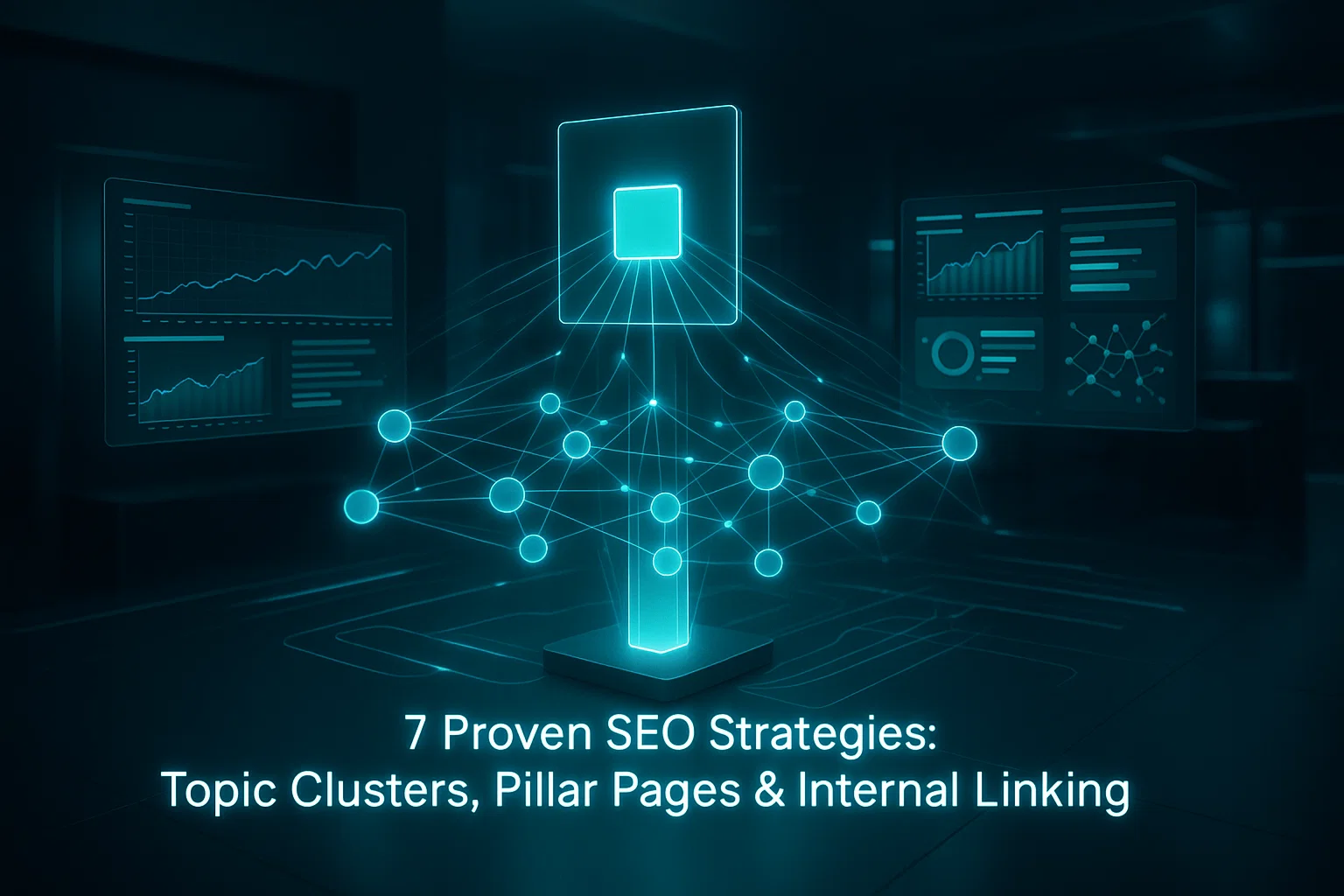
Topic clusters help you demonstrate that expertise. The concept is straightforward: pick a broad subject you want to rank for, create one big comprehensive guide (your pillar page), then write multiple detailed articles on specific aspects of that topic (your cluster pages). Link them all together, and you’ve got a structure that search engines can easily understand.
Why does this matter? Because Google doesn’t just look at individual pages anymore. It evaluates your entire site to determine if you’re an authority on a subject. If you’ve got one article about social media marketing and nothing else, you’re not an authority. But if you’ve got a complete guide plus separate deep dives into Instagram strategy, LinkedIn for B2B, Twitter advertising, and influencer partnerships, all properly linked, now you’re talking.
I started using this approach about three years ago with a client in the SaaS space. Their traffic was flat, rankings weren’t moving. We reorganized their existing content into three major topic clusters and added some new pieces to fill gaps. Four months later, organic traffic was up 47%, and they’d jumped from page three to page one for their main target keywords.
Pillar Pages: The Foundation of Your Content Hub
Your pillar page is the center of everything. It’s a comprehensive resource that covers a broad topic but doesn’t try to explain every tiny detail; that’s what the cluster pages are for.
Most pillar pages run between 3,000 and 5,000 words. That sounds like a lot, but you’re covering an entire subject area. A pillar page on “Email Marketing” might discuss what email marketing is, why businesses use it, key metrics to track, general best practices, and an overview of different campaign types. Then it links out to cluster pages that go deep on things like subject line optimization, segmentation strategies, automation workflows, and compliance requirements.
The structure benefits everyone. Readers get a clear starting point and can easily find more detailed information on whatever interests them. Search engines get a clear signal about your site’s expertise. And you get better rankings because your content is organized logically instead of being scattered all over the place.
One fitness blog I worked with created a pillar page called “Complete Strength Training Guide.” They already had most of the content,articles on different exercises, nutrition advice, and recovery tips,but it was disorganized. Once we created the pillar page and properly linked everything, their rankings improved across the board. Even older articles that hadn’t ranked well suddenly started getting traffic because they were part of a larger, authoritative structure.
Internal Linking Best Practices for SEO Success

Internal linking is probably the easiest SEO win that most people ignore. Everyone obsesses over getting backlinks from other websites, which is important, but they forget about the links within their own site.
Done right, internal linking helps search engines crawl your site efficiently, passes authority from strong pages to weaker ones, and keeps visitors engaged by showing them related content.
The basics aren’t complicated. Link from your highest-performing pages to content you want to boost. Use descriptive anchor text. If you’re linking to an article about keyword research, use anchor text like “keyword research strategies” instead of generic phrases like “this article” or “click here.” Don’t go overboard, though. Somewhere around 2-5 internal links per 1,000 words is reasonable, though it depends on your content.
Here’s something I always do when publishing new content: I immediately go back to 3-5 older related posts and add links to the new piece. This integrates it into the site structure right away instead of leaving it isolated. And every few months, I run a check for orphan pages, content with no internal links pointing to it. Those pages might as well not exist.
The other thing people mess up is not linking between cluster pages. If you’ve got a cluster about Instagram marketing and another about Facebook ads, and you mention cross-platform strategies, link them together. It makes sense for readers and strengthens your topical authority.
How Topic Clusters, Pillar Pages, and Internal Linking Work Together
When you put all three elements together, your website stops being a random collection of blog posts and becomes an organized knowledge base. That’s when SEO results really take off.
The system works like this: Each cluster page targets a specific subtopic and links back to your pillar page. The pillar page links out to all relevant clusters. Cluster pages can also link to each other when it’s relevant. This creates a web of interconnected content that search engines can easily crawl and understand.
The internal links hold everything together, passing SEO value throughout the structure and helping both search engines and visitors understand how your content relates to each other. Someone lands on any page in your cluster; they can easily jump to related topics or back to the main guide.
Last year I helped a small travel blog implement this for Iceland content. They already had decent articles scattered around, things about the Ring Road, Northern Lights, hot springs, Reykjavik restaurants. We created a comprehensive pillar page about planning an Iceland trip and restructured everything as clusters. Six months later, they were outranking Lonely Planet and TripAdvisor for several search terms. The content quality hadn’t changed,just the organization.
Implementing These SEO Strategies Across Different Platforms
This strategy isn’t limited to blog-heavy websites. It adapts to different business models and platforms surprisingly well.
E-commerce sites can use pillar pages as category buying guides, with clusters covering product comparisons, care instructions, sizing guides, and reviews. A furniture store might have a pillar about “Living Room Design,” with clusters on choosing the right sofa, coffee table styles, lighting options, and how to arrange furniture for small spaces.
Mobile optimization deserves special mention because over 60% of searches happen on phones now. Your pillar pages need to load fast and be easy to navigate on a small screen. Use jump links so people can skip to relevant sections without scrolling through everything. Keep paragraphs short and use plenty of subheadings.
Social media can amplify your topic cluster strategy too. Share different cluster articles throughout the week, all linking back to your pillar content. This drives traffic and reinforces your expertise on the topic. Just adapt your approach to how people use each platform: quick tips and visuals for Instagram, longer discussions for LinkedIn, that sort of thing.
Leveraging AI and Advanced Tools in Your SEO & Content Strategy

AI has changed content planning dramatically, though not in the way most people think. I’m not talking about having ChatGPT write your blog posts; please don’t do that. The real value is in research and optimization.
Tools like Clearscope, Surfer SEO, and SEMrush analyze top-ranking content and show you what topics and keywords you should cover. They identify gaps in your content clusters and suggest new cluster pages you haven’t considered. Some tools will analyze your internal linking structure and recommend connections you’ve missed.
Research that used to take hours now takes maybe 20 minutes. You can quickly see what questions people ask about your topic, what related subjects you should address, and how competitors structure their content.
But, and this is critical, AI should inform your strategy, not replace your judgment or voice. Use these tools to figure out what to write about and how to optimize it, but the actual writing needs your experience and perspective. That’s what builds trust with readers and satisfies Google’s emphasis on demonstrating genuine expertise.
I use AI tools for content gap analysis and keyword research all the time. But the writing? That’s still me, based on what I’ve learned from actually doing this work.
Common Mistakes to Avoid When Building Your SEO Content Architecture
People sabotage their own efforts in some pretty consistent ways. Here’s what to watch out for.
The biggest mistake is skipping proper keyword research. You can’t guess what people search for; you need actual data. I’ve seen people create entire content clusters around terms that get maybe 10 searches per month. That’s a waste of everyone’s time.
Thin content is another trap. If your cluster pages are just 300-word fluff pieces that barely scratch the surface, you’re not helping anyone. Each cluster should thoroughly answer questions about its specific subtopic. One solid 1,500-word article beats five shallow 300-word posts every time.
Some people overdo internal linking and end up with pages that have 30 or 40 links. That doesn’t help; it overwhelms readers and dilutes the SEO value. Be strategic. Link to content that genuinely relates and adds value.
Mobile optimization can’t be optional anymore. If your pages take forever to load on a phone or look broken on mobile browsers, you’re losing more than half your potential traffic. Test your pages on actual mobile devices, not just in desktop browser emulators.
The last big mistake is treating this as a one-time project. Your content needs regular updates. Old information gets outdated, links break, and new opportunities emerge. Set aside time every quarter to audit your structure and make improvements.
Measuring the Impact of Topic Clusters, Pillar Pages, and Internal Linking
You need to track specific metrics to know if this strategy is actually working.
Start with organic traffic to your pillar and cluster pages. Set up Google Analytics to monitor how people move between related content. Are they clicking your internal links? Are they reading multiple cluster pages after landing on your pillar? That engagement data tells you if your structure makes sense.
Track keyword rankings for both broad pillar terms and specific cluster topics. You should see gradual improvement across multiple keywords, not just one or two. Check bounce rate and average session duration. If people are immediately leaving or spending just 15 seconds on your pages, something’s wrong with your content or site experience.
Backlinks matter too. As your pillar pages gain authority, other sites will start linking to them as reference material. That’s a strong signal you’ve established real topical authority.
Google Search Console is invaluable here. Monitor impressions, clicks, and average position for your target keywords. I set up monthly reports for clients so we can spot trends early and adjust the strategy if needed.
Don’t expect overnight results, though. This is a 3-6 month play before you see significant movement. But once the momentum builds, the results tend to compound.
Conclusion: Taking Your SEO Strategy to the Next Level
SEO isn’t rocket science, but it does require strategic thinking. Topic clusters, pillar pages, and internal linking give you a proven framework for creating content that ranks and genuinely helps people find what they need.
Start with an audit of your existing content. You probably have articles scattered across your site that could be organized into logical clusters. Identify your strongest pages that could work as pillars, then figure out what supporting content you need to create or reorganize.
Fix your internal linking structure. This is something you can tackle today with immediate impact. Go through your top-performing pages and add relevant links to related content. Make sure every important page has at least a few internal links pointing to it.
Keep refining over time. SEO isn’t a one-and-done project. As you publish new content, fit it into your existing structure. As you see what works, create more content around those successful topics.
The websites dominating search results aren’t necessarily the ones with massive budgets or thousands of articles. They’re the ones that organize content intelligently, demonstrate clear expertise, and make it easy for both search engines and readers to find valuable information. That’s what this strategy delivers, and that’s how you actually win at SEO.
Frequently Asked Questions (FAQs):
1. What are topic clusters in SEO?
Topic clusters are groups of related content linked to a central pillar page, helping search engines understand your site’s expertise and improving keyword rankings.
2. How do pillar pages improve SEO performance?
Pillar pages act as comprehensive hubs covering broad topics, strengthening topical authority and enhancing user navigation through linked cluster pages.
3. Why is internal linking important for SEO?
Internal linking boosts crawlability, distributes PageRank, and guides users through related content, increasing engagement and search visibility.
4. How can AI tools support topic cluster and pillar strategies?
AI tools analyze keywords, content gaps, and user intent to build optimized clusters, suggest internal links, and enhance SEO efficiency.
5. What metrics help measure the success of topic clusters?
Track organic traffic, keyword rankings, bounce rate, and internal link performance to assess how effectively your content architecture drives SEO results.
“Boost your organic traffic with SeoByte’s Human + AI SEO solutions – smarter strategies, faster results.”
Leave a Reply